A great custom print starts with your design. Bringing it to life takes the right combination of color, detail, materials, and production.
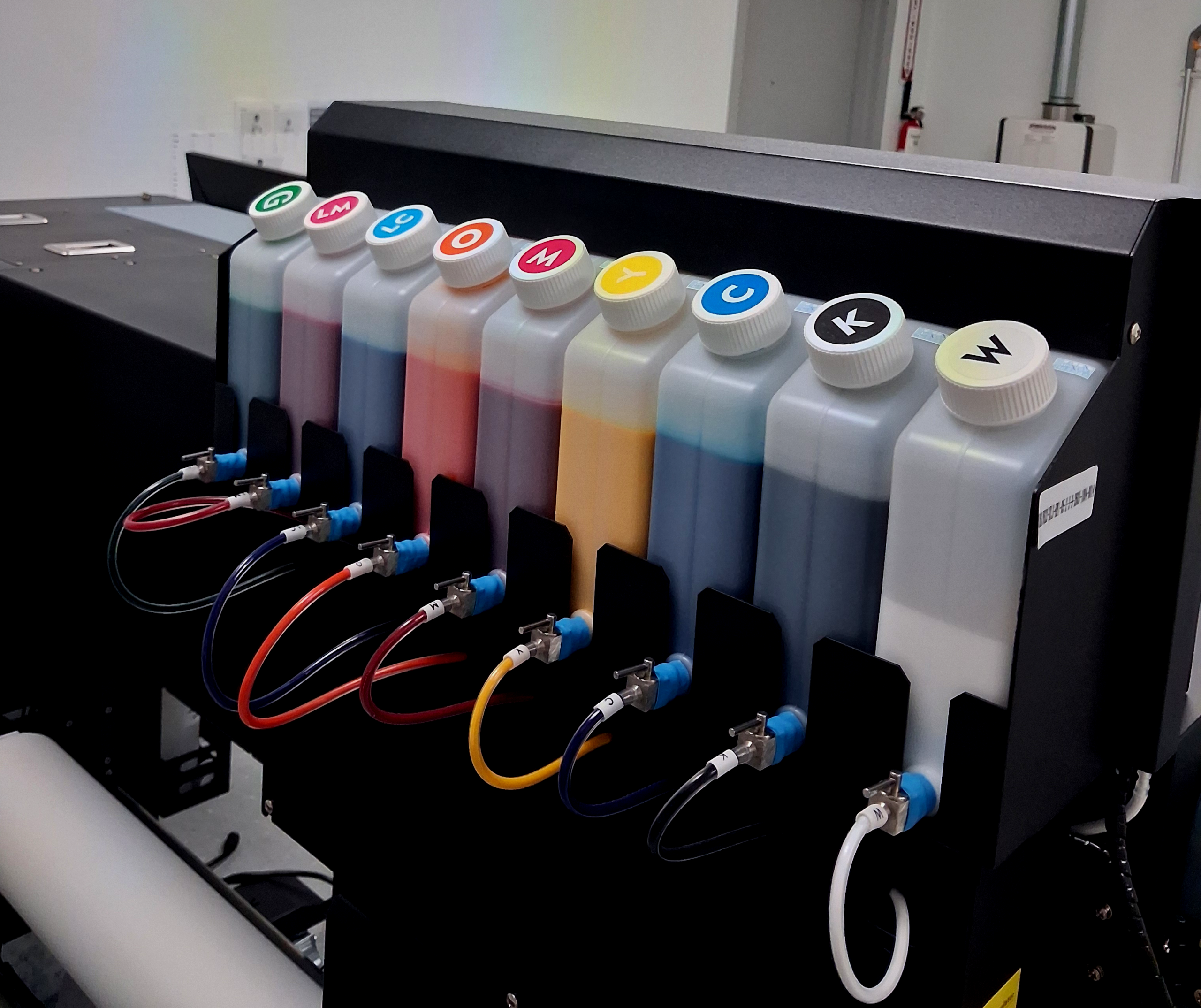
At IndyDTF, we use nine-color DTF printing to give colorful artwork a wider range of printable colors. Here is what that means for your next project.
What is nine-color DTF printing?
DTF stands for Direct to Film. Your artwork is printed onto a special film, prepared with adhesive, and transferred onto a garment using a heat press.
Many DTF printers use five inks: cyan, magenta, yellow, black, and white. The first four are commonly called CMYK.
Our nine-color setup adds light cyan, light magenta, green, and orange. Green and orange expand the printer’s color gamut—the range of colors it can reproduce—while light cyan and light magenta help reproduce subtle tones and smoother color transitions.
That wider range gives us more flexibility when printing vivid artwork, especially shades that can be difficult to reproduce with standard CMYK inks.
How does nine-color DTF compare?
Swipe left or right to compare all columns.
| Feature | Standard CMYK + White DTF | IndyDTF nine-color DTF |
|---|---|---|
| Ink colors | Cyan, magenta, yellow, black, and white | Those same five, plus light cyan, light magenta, green, and orange |
| Printable color range | Standard CMYK range | Expanded range for reproducing more colors |
| Potential benefits | Can produce excellent everyday text, logos, and graphics | More color possibilities for vivid illustrations, colorful logos, and detailed graphics |
| Where the difference may be noticeable | Colors within the standard range | Certain greens and oranges, along with subtle tones and color transitions |
| What still matters | Artwork quality, color settings, materials, and application | Those same factors remain essential |
More inks create more color possibilities. They do not guarantee that every design will look dramatically different. A simple black-and-white logo may show little difference, while colorful artwork may benefit more from the expanded range.
White ink helps colors stand out
White ink is an important part of DTF printing, especially on dark garments. It creates a base beneath the colored artwork, helping prevent the shirt’s color from overwhelming the design.
A properly controlled white base supports strong color and clean detail. The amount and placement of white ink matter, too—quality comes from using it correctly.
Your artwork makes a difference
Even an advanced printer cannot recover detail that is missing from the original file. A small screenshot or blurry logo can still look soft when enlarged.
For the best starting point:
- Send the original file. Original artwork usually provides more detail than a screenshot or an image saved from social media.
- Use enough resolution for your print size. For raster artwork, 300 DPI at the intended print size is a useful target.
- Use a transparent background when needed. If a background is part of the image, it may become part of the print.
- Check small details. Very fine lines and tiny lettering may need adjustment to reproduce clearly.
Unsure whether your file is ready? Ask us to review it before ordering.
Quality depends on the whole process
Nine-color printing is one part of a quality result. Printer maintenance, color settings, film, adhesive powder, curing, and heat-press application also affect how the finished print looks and performs.
Sharpness depends on the source artwork and how the printer reproduces it. Adhesion and durability depend on suitable materials, proper curing, correct application, and garment care. Additional ink colors primarily improve the range of colors available.
If you are pressing transfers yourself, follow the application instructions supplied with your order, including temperature, time, pressure, and peeling guidance.
Will the print match my screen?
Your screen produces color with light. A garment displays color through ink and reflected light, so the two can look different.
Screen brightness, display settings, garment color, and viewing conditions all influence what you see. Nine-color printing expands the printable range, but it does not guarantee an exact screen match or an exact match to every brand color.
For a project where color matching is especially important, discuss a physical sample before placing a larger order.
Bring your next design to life
At IndyDTF, nine-color printing gives us more ways to reproduce colorful artwork. Combined with a well-prepared file and careful production, it helps us turn your design into a print you can be proud to wear.
Have a design ready—or need help checking your artwork? Contact IndyDTF, and we’ll help you choose the right option for your project.
Was this helpful?
Log in to vote


